
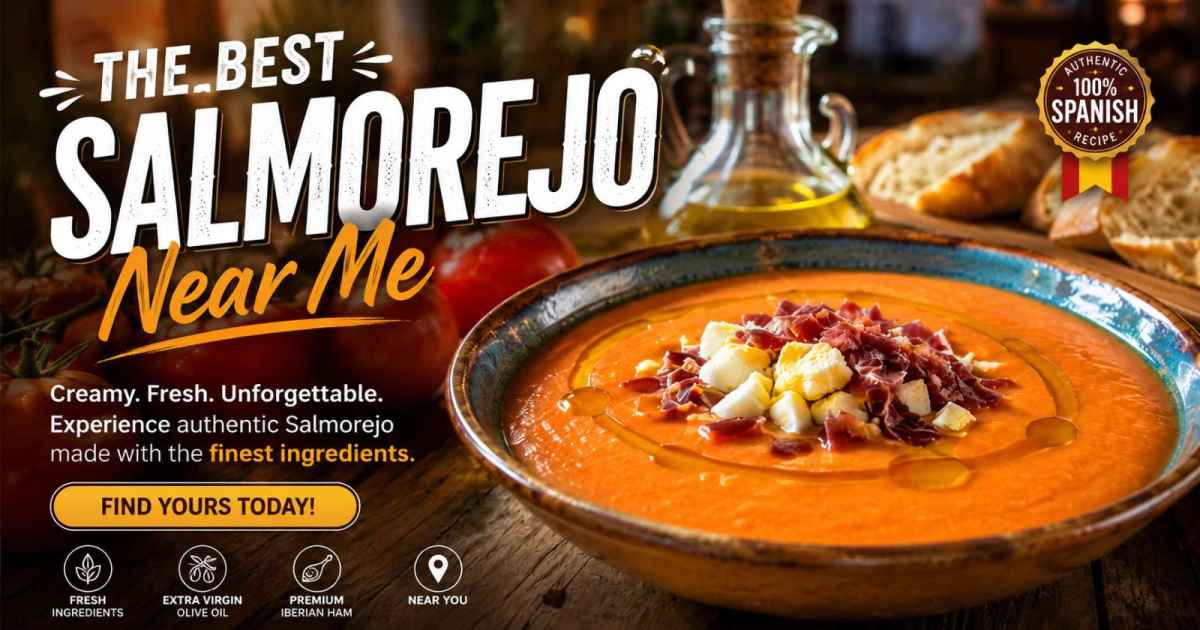
Searching for the best salmorejo near me can lead you down a surprisingly delicious rabbit hole. You might begin with a simple Google search, open a few restaurant listings, and suddenly find yourself comparing menus, photographs, customer reviews, and descriptions of traditional Andalusian dishes. Salmorejo may look simple in a bowl, but a genuinely good version depends on the quality of its ingredients, the balance of flavors, the texture, and the care used during preparation. This cold Spanish soup has deep roots in Córdoba, Andalusia, and its combination of ripe tomatoes, bread, extra-virgin olive oil, garlic, and vinegar creates something much richer and more satisfying than the word “soup” might suggest. Traditionally served cold and finished with toppings such as chopped hard-boiled egg and cured ham, salmorejo is especially appealing when you want something refreshing without sacrificing flavor. The challenge is that not every restaurant prepares it in the same way, and a dish advertised as salmorejo may be adapted to suit local tastes. So, how do you separate an average bowl from the best salmorejo near me? The answer begins with knowing what authentic salmorejo should taste and feel like, understanding where restaurants are most likely to serve it, and learning how to use local reviews intelligently. Whether you are exploring Spanish cuisine for the first time, planning a food-focused trip, or simply craving a creamy cold tomato dish today, a few practical tricks can make your search much easier. Think of this guide as your roadmap: instead of randomly choosing the first restaurant that appears in search results, you can make a more informed decision and increase your chances of discovering a bowl that actually deserves to be called exceptional.
What Is Salmorejo and Why Is It So Popular?
Salmorejo is a traditional Andalusian cold soup most strongly associated with Córdoba, Spain. At its heart, the recipe is wonderfully uncomplicated: ripe tomatoes are blended with bread, garlic, extra-virgin olive oil, and usually a small amount of vinegar and salt. The bread gives salmorejo its famously thick, velvety body, while the olive oil contributes richness and a smooth finish that distinguishes it from many lighter tomato-based soups. Unlike some dishes that depend on a long cooking process or a huge list of ingredients, salmorejo demonstrates how technique and ingredient quality can transform humble foods into something memorable. A properly prepared serving should generally feel creamy rather than watery, with a balanced tomato flavor supported by fruity olive oil and a subtle garlic note. It is traditionally served chilled, making it particularly attractive during hot weather, although its popularity means you can find it on menus throughout the year. The dish has also become a recognizable symbol of Córdoba’s culinary identity and an important part of the broader Spanish tradition of cold vegetable soups. If you search for traditional salmorejo near me, you may notice restaurants describing their versions as Córdoba-style, Andalusian, authentic, or homemade. Those descriptions can be useful clues, but they are not guarantees of quality. The real test comes from the bowl itself: Does the salmorejo have a smooth, almost silky consistency? Does the tomato taste fresh rather than overly acidic? Is the olive oil noticeable without overwhelming everything else? Does the garlic add character rather than dominate the palate? These details matter because salmorejo has nowhere to hide. With such a short ingredient list, every component becomes part of the final experience.
The Traditional Ingredients That Make Salmorejo Special
The secret behind excellent salmorejo is not an exotic ingredient; it is ingredient quality and proportion. Tomatoes are arguably the foundation, so ripe, flavorful tomatoes can make an enormous difference. Bread provides structure and helps create the thick consistency associated with traditional salmorejo, while extra-virgin olive oil gives the mixture its characteristic richness and smooth mouthfeel. Garlic contributes a savory edge, although the quantity needs to be carefully controlled because raw garlic can quickly become overpowering. A little vinegar may be included to sharpen the flavor, while salt brings the ingredients together. Traditional toppings often include chopped hard-boiled egg and finely diced jamón, creating a contrast between the cool, creamy tomato base and the savory, slightly salty garnish. When you are looking for the best salmorejo near me, paying attention to the restaurant’s description can reveal how seriously it takes the dish. A menu that specifically mentions Córdoba-style preparation, traditional ingredients, extra-virgin olive oil, homemade preparation, or classic toppings may be worth investigating. That does not mean a chef cannot create an excellent variation. Culinary creativity is part of what makes eating out exciting, and modern restaurants sometimes introduce different garnishes or presentation styles while retaining the essential character of salmorejo. Still, if your goal is authenticity, the closer the preparation stays to the traditional ingredient profile, the easier it is to compare the dish with the classic Andalusian version. The most memorable salmorejo tends to demonstrate restraint: rather than throwing in dozens of flavors, the kitchen allows tomato, olive oil, garlic, and bread to work together. It is a bit like listening to a small acoustic band instead of a giant orchestra; every individual note matters.
How to Search for the Best Salmorejo Near Me
The phrase “best salmorejo near me” reflects a classic local-search intention: you are not simply researching the dish, you are potentially looking for somewhere you can eat it. That means proximity, opening hours, menu availability, reviews, price, and restaurant reputation can all influence your decision. Start by searching the exact phrase through Google or your preferred map application, then expand the search using related terms such as salmorejo Spanish restaurant near me, authentic salmorejo near me, Andalusian restaurant near me, Córdoba salmorejo near me, or Spanish tapas near me. Different wording can reveal restaurants that do not rank prominently for the exact phrase but still serve the dish. Once you find candidates, check whether salmorejo is actually listed on the current menu rather than relying exclusively on an old review or photograph. Restaurant menus change, seasonal dishes come and go, and online directories can sometimes contain outdated information. Photos can also help, especially if several customers have uploaded images of the dish. Look for a thick, smooth presentation and traditional garnishes, while remembering that appearance alone cannot determine flavor. If a restaurant has many recent reviews mentioning salmorejo specifically, that is more useful than hundreds of generic comments about service or atmosphere. You can also search social media or the restaurant’s own menu for recent references. The smartest approach is to combine several signals instead of treating one website or star rating as absolute truth. Finding great food locally is a little like detective work: each menu, review, photograph, and recommendation gives you another piece of the puzzle.
Use Google Maps and Local Search the Smart Way
When looking for salmorejo near me, map-based searches can be particularly helpful because they combine location information with customer reviews, photographs, operating hours, and restaurant details. Rather than automatically selecting the restaurant with the highest overall rating, open several nearby listings and search within their reviews for words such as “salmorejo,” “gazpacho,” “Córdoba,” “Spanish,” “Andalusian,” or “tapas.” This can quickly tell you whether people are actually ordering and enjoying the dish you want. A restaurant with a 4.4 rating and numerous positive comments specifically praising its salmorejo may be a stronger candidate than a 4.8-rated restaurant where nobody mentions the dish. Distance also matters, particularly because a chilled preparation can be best enjoyed shortly after it is served and because convenience is part of local dining. Check the restaurant’s current opening hours before traveling, especially if you are searching around lunch or dinner when some Spanish-style restaurants may follow different service schedules. Menu links are valuable as well because they let you confirm that salmorejo is currently available. If the restaurant specializes in Spanish cuisine, explore the rest of the menu too; a broader Andalusian or tapas-focused menu can provide useful context about the kitchen’s culinary focus. You can even compare several restaurants side by side based on price, reviews, menu descriptions, and photographs. This takes only a few minutes but can prevent the classic mistake of driving across town for a dish that disappeared from the menu months ago. Local search works best when you use it as a research tool rather than simply accepting the first result.
Read Reviews Beyond the Star Rating
Restaurant ratings are useful, but they rarely tell the whole story when your goal is finding the best salmorejo near me. A high overall score might reflect excellent cocktails, friendly servers, beautiful décor, or outstanding desserts while saying almost nothing about the specific dish you want. Instead, read recent reviews and look for comments that describe salmorejo in concrete terms. Words such as creamy, silky, fresh, tomato-forward, garlicky, balanced, cold, thick, rich, traditional, homemade, and authentic can provide meaningful clues. On the other hand, repeated complaints about watery texture, excessive garlic, bland tomatoes, or poor temperature may be warning signs. Pay attention to patterns rather than isolated opinions because taste is subjective. One diner might dislike a strong olive-oil flavor while another considers that exact characteristic essential to a great salmorejo. Recent reviews are particularly important because restaurants can change chefs, suppliers, recipes, or menus over time. Customer photographs can add another layer of information, although presentation can vary from one day to another. You should also consider whether reviewers appear familiar with Spanish cuisine. Someone encountering salmorejo for the first time may describe its thick texture as unusual, whereas someone who regularly eats Andalusian food may provide a more useful comparison. The goal is not to find a review that tells you exactly what you will taste; it is to identify consistent evidence that the kitchen understands the dish. In other words, don’t ask only, “How many stars does this restaurant have?” Ask, “What do people who actually ate the salmorejo say about it?”
What Makes the Best Salmorejo Near Me Stand Out?
The best salmorejo near me should deliver balance from the first spoonful to the last. Texture is one of the easiest characteristics to notice because traditional salmorejo is significantly thicker and creamier than many people initially expect from a cold tomato soup. It should feel smooth and substantial without becoming heavy or pasty. The tomato flavor should remain recognizable, while the olive oil adds depth and a gentle fruity quality. Garlic should support the dish rather than take center stage, and acidity should brighten the mixture instead of making it taste sharply sour. Temperature matters too. Salmorejo is traditionally served cold, which allows it to function as a refreshing starter or light meal, particularly in warm climates. The toppings then add another dimension: chopped egg brings softness and richness, while jamón contributes saltiness and texture. A great restaurant does not need to reinvent the dish to make it impressive. Sometimes the best bowl is the one that respects the classic formula and executes it exceptionally well. You might also notice differences in color, depending on the tomatoes, olive oil, bread, and preparation technique. Don’t automatically assume that a brighter red bowl is better than a darker or more orange one; flavor and texture tell you much more than color. If you are trying salmorejo for the first time, consider ordering the traditional version before experimenting with creative variations. Once you understand the classic profile, you’ll have a much better reference point for judging modern interpretations.
Texture, Temperature, and Flavor
When evaluating a bowl of salmorejo, think about three things first: texture, temperature, and flavor balance. Texture should be creamy and cohesive, with enough body to distinguish salmorejo from a thin tomato soup. Temperature should be properly chilled, but the dish should not feel so cold that it suppresses the tomato and olive-oil flavors. Flavor should develop gradually: you should notice the sweetness and acidity of tomato, the richness of olive oil, the gentle warmth of garlic, and the savory character created by the bread and seasonings. The best versions don’t taste like separate ingredients competing for attention; they taste integrated, as if everything belongs in the same sentence. This balance is one reason ingredient ratios matter so much. Too much bread can make the soup dense and dull, while insufficient bread can leave it thin. Too much garlic can overwhelm the tomato, and excessive vinegar can make the dish harsh. Poor-quality oil can also flatten the overall flavor. When you search for creamy salmorejo near me, remember that “creamy” should generally describe the texture rather than imply dairy. Traditional salmorejo achieves its smooth consistency without requiring cream. That distinction can be useful when reading restaurant menus or explaining your preferences to a server. If you want to appreciate the dish properly, take a small spoonful without immediately mixing in the toppings. Taste the base first, then try it with the egg and jamón. That simple comparison can reveal how thoughtfully the kitchen has built the dish.
Fresh Ingredients and Traditional Preparation
Freshness is especially important for salmorejo because the dish depends heavily on a handful of ingredients rather than a complicated cooking process. Ripe tomatoes should provide a naturally vibrant flavor, while good extra-virgin olive oil can add fruitiness, pepperiness, and depth. Bread must contribute body without turning the mixture unpleasantly dense, and fresh garlic should be used with enough restraint to preserve balance. Restaurants that prepare salmorejo in-house may have an advantage because they can control the consistency and adjust the seasoning rather than simply reheating or serving a standardized product. Salmorejo is generally served cold and does not depend on lengthy cooking to develop its flavor, which means preparation technique becomes particularly important. When searching for authentic salmorejo near me, look for restaurants that demonstrate a genuine connection with Spanish cuisine through their wider menu. A kitchen serving Spanish cheeses, jamón, tapas, tortilla española, croquettes, seafood dishes, and other regional specialties may have more experience with traditional preparations. Again, this isn’t a strict rule: talented chefs can produce excellent salmorejo anywhere. However, culinary specialization can be a useful clue when you have several restaurants to choose from. Don’t be afraid to ask the server how the salmorejo is prepared if authenticity matters to you. A knowledgeable answer can tell you more than a vague menu description. Restaurants proud of their food will often be happy to explain the dish, its origins, or its toppings.
Where to Find Authentic Salmorejo Near Me
If you want authentic salmorejo near me, start with restaurants specializing in Spanish cuisine, especially establishments that highlight Andalusian food. Spanish restaurants and tapas bars are natural places to look because salmorejo fits comfortably alongside small plates, cured meats, cheeses, seafood, and other regional specialties. You may also find it at restaurants with a broader Mediterranean menu, although the preparation can vary considerably. Searching specifically for Andalusian restaurant near me can narrow the field further because salmorejo has strong regional associations with southern Spain. Another useful strategy is to look at lunch menus and seasonal menus. Because salmorejo is a chilled dish, some restaurants emphasize it more strongly during warmer months. Food markets, Spanish cafés, specialty delis, and cultural events can also occasionally feature the dish, particularly if vendors are showcasing regional Spanish cuisine. If you live somewhere with a large Spanish or Latin European community, local recommendations can be surprisingly valuable. Ask people who regularly eat Spanish food rather than simply asking where the nearest restaurant is. A recommendation such as “their salmorejo is made fresh every day” gives you far more useful information than a generic “that place is good.” Ultimately, authenticity comes from preparation and culinary tradition rather than the restaurant’s geographic location. A chef does not have to be standing in Córdoba to make excellent salmorejo. What matters is whether the kitchen understands the dish and respects the characteristics that make it special.
Spanish Restaurants and Andalusian Cuisine
Spanish restaurants are often your strongest starting point when searching for traditional salmorejo near me, particularly those that identify with Andalusian cuisine. Andalusia is home to a remarkably diverse food culture, and Córdoba’s salmorejo is one of its best-known cold preparations. A restaurant that actively features regional Spanish dishes may be more likely to prepare salmorejo according to a traditional recipe rather than treating it as a generic tomato soup. Look through the menu for clues such as Salmorejo Cordobés, Córdoba-style salmorejo, Andalusian salmorejo, or a description featuring tomato, bread, olive oil, garlic, egg, and jamón. Such terminology does not automatically prove authenticity, but it gives you a useful starting point. You can also examine the restaurant’s other dishes. A menu that includes a variety of Spanish regional specialties suggests that the kitchen may have broader experience with traditional ingredients and techniques. If the menu is dominated by unrelated cuisines, the salmorejo might be a creative adaptation rather than a classic interpretation. That isn’t necessarily bad; some adaptations are delicious. It simply means you should decide what you want before ordering. Are you seeking an authentic taste of Córdoba, or do you simply want a delicious chilled tomato dish? Both are perfectly reasonable goals. Knowing the difference helps you interpret menu descriptions and customer reviews more effectively.
Tapas Bars, Cafés, and Local Food Markets
Don’t limit your best salmorejo near me search to formal restaurants. Tapas bars and Spanish cafés can be excellent places to discover the dish, particularly if the establishment focuses on traditional small plates. Salmorejo works beautifully as part of a tapas-style meal because its creamy, cool texture provides contrast to grilled meats, fried foods, cured meats, and salty cheeses. Local food markets are another possibility, especially in cities with strong international food scenes. Vendors may serve small portions that allow you to sample salmorejo without committing to a full bowl. This can be a fun strategy if you are comparing several Spanish food destinations in one afternoon. Café menus can vary more dramatically, so always confirm that the dish is actually available before visiting. A menu photo or recent customer review can help establish whether salmorejo is a regular offering or an occasional special. You can also ask whether the restaurant serves it with traditional toppings. Sometimes a small serving with egg and jamón can tell you almost everything you need to know about the kitchen’s interpretation. If you discover an exceptional version, save the restaurant in your maps app or keep a personal food list. Local food discoveries become much more valuable when you can return to them later rather than trying to remember the name of a place you visited months ago.
Salmorejo vs Gazpacho: What Is the Difference?
The difference between salmorejo and gazpacho is one of the first things you may encounter while searching for Spanish cold soups. Both are associated with Andalusia and rely heavily on fresh vegetables, particularly tomatoes, but their textures and ingredient proportions are quite different. Traditional salmorejo is thick, smooth, and creamy, with bread playing an important role in its consistency. Gazpacho is generally thinner and more soup-like, often incorporating ingredients such as cucumber, pepper, onion, and additional water depending on the recipe. Gazpacho is commonly served in a way that makes it easy to drink or pour, while salmorejo is typically eaten with a spoon. The flavor profiles can overlap because both dishes feature tomato, olive oil, garlic, and acidity, but salmorejo tends to feel richer and more concentrated. If you order salmorejo expecting a light, watery vegetable soup, its density may surprise you. That isn’t a flaw; it is part of the dish’s identity. Conversely, if you want something especially refreshing and vegetable-forward, gazpacho may better match your preference. When searching online, be careful not to treat the terms as interchangeable. A restaurant may offer both, and reading the menu description can help you decide which one suits your appetite. If you’re specifically searching for the best salmorejo near me, don’t let search results for gazpacho distract you. Use related searches to discover Spanish restaurants, but confirm the exact dish before making your trip.
How to Choose Salmorejo at a Restaurant
Choosing salmorejo becomes much easier once you know what questions to ask. First, confirm that the restaurant currently serves it, because seasonal availability and menu changes can make online information unreliable. Next, check whether the description identifies the preparation as traditional, Córdoba-style, homemade, or Andalusian. You can then look at recent photographs and reviews for evidence about texture and toppings. If the menu offers several versions, the classic preparation is usually the best starting point for someone who wants to understand authentic salmorejo. Consider ordering a small serving if you are uncertain about the texture; its thickness and rich olive-oil character are quite different from many familiar tomato soups. If you enjoy it, you can order more or return another day. Ask the server whether the salmorejo is served with jamón and hard-boiled egg, especially if the menu doesn’t specify. Toppings aren’t merely decoration; they create contrast and are part of the traditional presentation. You should also think about what you are eating alongside it. Salmorejo pairs naturally with other Spanish dishes, so you can build a meal around contrasting flavors and textures. A plate of grilled vegetables, seafood, tortilla, or cured meats can complement the chilled soup without overwhelming it. Ultimately, ordering salmorejo is less complicated than it may seem. Know the classic characteristics, check recent information, and trust restaurants that demonstrate genuine enthusiasm for their ingredients.
What to Look for in Restaurant Reviews
When comparing restaurants for the best salmorejo near me, review quality matters more than review quantity. A restaurant may have thousands of ratings, but if only one person mentions salmorejo, you have limited evidence about the dish itself. Search recent reviews for specific comments about the soup’s texture, flavor, freshness, toppings, and portion size. Reviewers sometimes provide details that restaurant menus don’t mention, such as whether the salmorejo is exceptionally garlicky or whether the kitchen serves it with generous amounts of jamón. Look for repeated observations because patterns are more reliable than individual preferences. If five different diners independently describe the salmorejo as creamy and flavorful, that’s a meaningful signal. If several recent customers complain that it was watery, you may want to investigate other options. Photos are useful too, particularly when they come from ordinary customers rather than professional promotional photography. You can sometimes see whether the dish has traditional toppings and whether the portion appears appropriate. Pay attention to dates because an old review may describe a completely different menu or chef. Reviews should help you reduce uncertainty, not eliminate it. Food is inherently personal, and even an acclaimed restaurant may prepare a version that doesn’t suit your taste. Think of online reviews as recommendations from a crowd of strangers: useful when their experiences agree, less useful when opinions are scattered.
Best Toppings and Pairings for Salmorejo
Traditional salmorejo toppings provide more than visual appeal. Chopped hard-boiled egg contributes a soft, mild richness that works beautifully with the acidity of tomato, while finely diced jamón adds savory depth and a touch of saltiness. A drizzle of good olive oil can reinforce the flavor of the base, especially when the restaurant uses a high-quality extra-virgin oil. Some contemporary chefs experiment with additional toppings, seafood, herbs, vegetables, or other creative ingredients. These variations can be enjoyable, but if you are searching for an authentic experience, start with the classic combination. Salmorejo also pairs naturally with a wide range of Spanish dishes because its cool, creamy texture can balance stronger flavors. Try it alongside tortilla española, grilled seafood, roasted vegetables, croquettes, or carefully selected cured meats. The goal is contrast rather than repetition. If every dish on the table is rich and salty, the meal can quickly become heavy. Salmorejo provides a refreshing counterpoint. Likewise, a selection of lighter vegetable dishes can make the meal feel bright and summery. If you’re visiting a Spanish restaurant for the first time, ordering salmorejo as a starter can be a smart move because it introduces you to an important part of Andalusian cuisine without requiring an entire meal centered on one unfamiliar dish. Once you find a restaurant that gets the base right, experimenting with pairings becomes part of the fun.
Tips for Finding Great Salmorejo When Traveling
Searching for salmorejo near me while traveling requires a slightly different strategy because you may not know the local restaurant landscape. Start by researching the regional food culture rather than searching only for restaurants with the highest ratings. In Spain, for example, looking specifically for Córdoba or Andalusian cuisine can point you toward establishments with stronger connections to the dish. If you’re outside Spain, search for Spanish restaurants, Andalusian restaurants, tapas bars, and Spanish cultural food events in your destination. Local food writers and recent diners can sometimes provide more useful recommendations than generic travel lists. Once you identify several candidates, compare their menus and recent reviews. Don’t assume the most expensive restaurant serves the most authentic food; excellent salmorejo can appear in casual establishments as well. Ask locals what they would order if they wanted traditional salmorejo. This simple question can produce recommendations you might never discover through generic search results. If you are visiting Córdoba or another Andalusian destination, trying salmorejo in its regional context can also give you a useful benchmark for judging versions elsewhere. Take notes or photographs of dishes you particularly enjoy so you can remember what characteristics appealed to you. Traveling for food is partly about collecting flavors and partly about understanding their origins. A bowl of salmorejo isn’t simply something to check off a list; it can be a small introduction to the history, climate, agriculture, and culinary habits of southern Spain.
Conclusion: Finding the Best Salmorejo Near Me
Finding the best salmorejo near me is easier when you know what you’re actually searching for. Instead of choosing a restaurant based solely on distance or its overall star rating, look for places with current menus, recent reviews, authentic Spanish or Andalusian offerings, and customer comments that specifically mention salmorejo. The dish itself should generally be smooth, thick, chilled, balanced, and built around quality tomatoes, bread, garlic, and extra-virgin olive oil. Traditional toppings such as hard-boiled egg and jamón can complete the experience and provide the contrast that makes a classic serving so satisfying. Don’t be afraid to explore beyond conventional restaurants, either; tapas bars, Spanish cafés, food markets, and specialty establishments can all lead to worthwhile discoveries. Most importantly, remember that “best” is ultimately personal. One diner may prefer an intensely garlicky bowl, while another may want a sweeter tomato flavor and a gentler finish. Your perfect salmorejo is the one that makes you want another spoonful. Once you’ve tasted a few versions, you’ll develop your own benchmark for texture, acidity, olive oil, toppings, and overall balance. And that’s when the search for best salmorejo near me becomes more than a Google query—it becomes an enjoyable way to discover Spanish food in your own neighborhood or wherever your travels take you.
FAQs About Finding the Best Salmorejo Near Me
1. What should I search for if I want authentic salmorejo near me?
Try several related searches rather than relying on one phrase. “Best salmorejo near me,” “authentic salmorejo near me,” “Andalusian restaurant near me,” “Córdoba salmorejo near me,” and “Spanish tapas near me” can reveal different restaurants. After finding a candidate, confirm that salmorejo is currently listed on its menu and check recent customer reviews that specifically discuss the dish.
2. What does traditional salmorejo taste like?
Traditional salmorejo generally has a rich tomato flavor with a smooth, thick texture. Extra-virgin olive oil contributes richness, while garlic and vinegar provide additional savory and acidic notes. The finished dish should taste balanced rather than overwhelmingly garlicky, sour, or oily. Traditional toppings such as chopped egg and jamón add additional flavor and texture.
3. Is salmorejo the same as gazpacho?
No. Although both are popular Andalusian cold soups, they have important differences. Salmorejo is typically thicker and creamier because bread plays a major role in its preparation, while gazpacho is generally thinner and may contain cucumber, peppers, onion, and other vegetables. If you specifically want salmorejo, check the menu carefully before ordering.
4. Where can I usually find traditional salmorejo?
Spanish and Andalusian restaurants are the best places to start. Tapas bars, Spanish cafés, specialty food markets, and restaurants specializing in regional Spanish cuisine may also serve it. When authenticity is important, look for menus that mention Córdoba-style or traditional salmorejo and read recent reviews to see what diners actually experienced.
5. What toppings traditionally go with salmorejo?
The most recognizable traditional toppings include chopped hard-boiled egg and jamón, often accompanied by a drizzle of olive oil. These ingredients complement the creamy tomato base by adding richness, saltiness, and texture. Modern restaurants may introduce creative toppings, but the classic combination is an excellent starting point if you want to experience traditional salmorejo.